Blog · Safety
Why Density Altitude Matters More in the IE Than Most Pilots Think
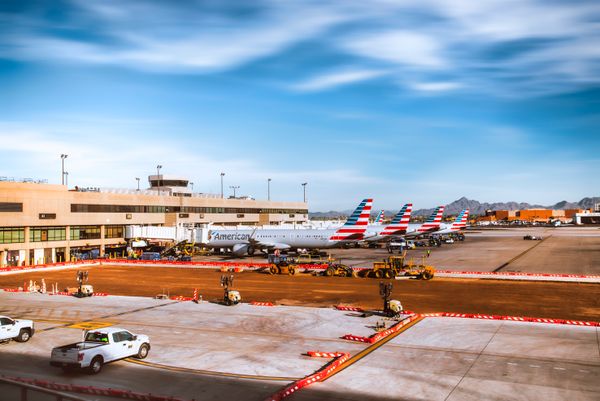
Density altitude is easy to underestimate in the Inland Empire. Redlands Municipal (KREI) sits at 1,574 feet, which doesn't sound high, but on a hot summer afternoon the airplane performs as if the field were thousands of feet higher. Add an uphill runway, a full load and a destination in the mountains or the desert, and the margins get thin quickly.
What density altitude is
Density altitude is pressure altitude corrected for temperature. It's the altitude in the standard atmosphere where the air would be as thin as the air you're actually flying in. The airplane doesn't care what the field elevation is; the wing, the propeller and the engine all respond to the density of the air. When it's hot, the air is thinner, and the airplane behaves as though it's higher.
A worked example at Redlands
Standard temperature at sea level is 15°C, and it drops about 2°C per 1,000 feet. At Redlands' 1,574 feet, standard is about 12°C. A handy rule of thumb adds about 120 feet of density altitude for every degree Celsius above standard.
On a 100°F afternoon, about 38°C, with a standard altimeter setting:
- 38°C minus 12°C is 26 degrees above standard
- 26 x 120 is about 3,100 feet
- 1,574 + 3,100 is about 4,700 feet
So the airplane is taking off from a runway that performs like one at about 4,700 feet. Use your airplane's performance charts, or a density altitude calculation from your preflight planning tools, for the real numbers.
Why the IE is a density altitude hotspot
- Heat. Inland valleys get much hotter than the coast in summer.
- Elevation. Many of the region's airports sit well above sea level, and the high desert and mountain airports are higher still.
- Terrain. The mountains around the basin mean climbing out of a hot valley toward rising ground.
- Uphill runways. Redlands' runway rises about 100 feet from west to east, so a Runway 8 takeoff is uphill, which lengthens the takeoff roll on top of the density altitude penalty.
What it does to your airplane
- Less engine power. A normally aspirated engine, like those in our Cessna 172 and 150, makes less power in thin air.
- Less propeller efficiency and less lift at a given indicated airspeed.
- Longer takeoff roll, because the airplane has to reach a higher true airspeed to fly.
- Weaker climb, sometimes dramatically, right when you need to clear obstacles and terrain.
- Longer landing roll, because your true airspeed at touchdown is higher.
The FAA's Koch chart, in the Pilot's Handbook of Aeronautical Knowledge, gives a quick estimate of how much longer your takeoff roll and how much weaker your climb will be. Your airplane's own performance charts are better.
The airports to watch
Approximate density altitudes for a hot afternoon, assuming a standard altimeter setting. These are illustrations, not forecasts.
- Redlands (KREI), 1,574 feet: about 4,700 feet at 100°F, with an uphill Runway 8.
- Hesperia (L26), 3,390 feet: nearly 7,000 feet at 100°F, on a 3,910-foot runway.
- Apple Valley (KAPV), 3,062 feet, and Victorville (KVCV), 2,885 feet: well over 6,000 feet on a hot day.
- Big Bear City (L35), 6,752 feet: above 10,000 feet on an 85°F afternoon. In Cornerstone aircraft, Big Bear requires the office's approval in advance, for exactly this reason.
- Palm Springs (KPSP), 477 feet, and Thermal (KTRM), 114 feet below sea level: low airports, but desert heat can still put density altitude at several thousand feet.
Practical rules for summer flying
- Fly early. Morning air is cooler and smoother, and performance is better.
- Run the numbers every time, for the actual temperature, weight and runway, including slope and surface.
- Lighten the load if the numbers are tight: less fuel, fewer passengers or less baggage.
- Lean for takeoff at high-elevation airports as your airplane's handbook directs.
- Use the whole runway, and set a point by which you'll abort the takeoff if you're not at the right speed.
- Expect a slower climb and plan your route out of the valley with that in mind.
The bottom line
Density altitude doesn't announce itself. The runway looks the same and the air feels the same until the airplane needs more of both. Do the arithmetic before every summer flight, and when the numbers are close, wait for the cool of the morning.
Cornerstone Flight Academy rents a Cessna 172 and a Cessna 150 at Redlands Municipal Airport, and an instructor can walk you through a hot-day takeoff and the performance charts before summer arrives. Call or text (909) 330-4748, or visit flycornerstone.com.
Book a $120 intro flight · Aircraft rental and time building · Pilot training at Cornerstone · More from the blog