Blog · Safety
What IMSAFE Actually Means (And Why Most Pilots Rush It)
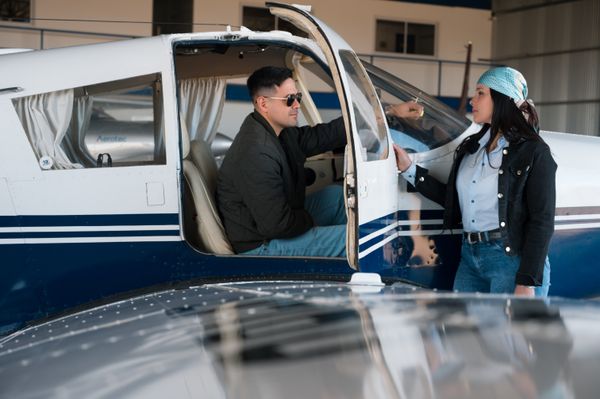
Every pilot learns IMSAFE during training. Most can recite it on command. Fewer actually use it.
The IMSAFE checklist is a pre-flight self-assessment tool designed to catch the human factors that cause accidents — the ones that don't show up in the weather briefing or the squawk log. It takes less than two minutes to run through honestly. It's one of the highest-leverage safety habits a pilot can build.
Here's what each element actually means, what honest assessment looks like, and why rushing it is one of the most common mistakes time-building pilots make.
I — Illness
Am I sick, or feeling off in any way that could affect my performance?
This isn't just about fever or a runny nose. Illness affects cognitive function, reaction time, and situational awareness — sometimes subtly. A pilot fighting a head cold may not feel "that bad" on the ground but will notice the effects at altitude where hypoxia compounds the problem.
The honest question isn't "am I sick enough to call in to work?" It's "am I at 100% of my normal cognitive and physical capacity?" If the answer is no, the go/no-go decision deserves serious consideration.
What pilots miss: Allergies. A pilot taking antihistamines to manage seasonal allergies may not think of themselves as "sick" — but the FAA says not to fly after taking sedating antihistamines (especially older first-generation ones like diphenhydramine) until a set waiting period has passed. Which brings us to M.
M — Medication
Am I taking any prescription or over-the-counter medication that could impair my performance?
This is where honest self-assessment gets uncomfortable. Pilots are taught that only "impairment" matters — but the FAA's position is more nuanced. Many medications are not approved for flight regardless of whether the pilot feels impaired. Feeling fine on a medication is not the same as being fit to fly.
Common offenders pilots overlook:
- Sedating antihistamines: diphenhydramine (Benadryl), the antihistamines in many nighttime cold medicines, and some allergy medicines
- Sleep aids, prescription or over-the-counter
- Some blood pressure medications
- Certain anti-anxiety medications
- Prescription pain medications such as opioids
The FAA's Do Not Issue / Do Not Fly guidance for aviation medical examiners covers the most common medications and how long to wait after taking them, though it isn't a complete list. When in doubt, call your AME — not the internet.
The rule of thumb: If the medication treats a condition, ask whether the condition itself is also disqualifying.
S — Stress
Am I under significant mental, emotional, or psychological stress?
Stress is the sneakiest item on the IMSAFE list because it's the hardest to self-assess objectively. When you're stressed, your cognitive bandwidth narrows. You fixate. You miss things. You make decisions based on what you want to be true rather than what is true.
Major life stressors — financial pressure, relationship conflict, work demands, family emergencies — all degrade aeronautical decision-making even when you feel like you're managing fine.
Honest questions to ask:
- Am I distracted right now?
- Have I been sleeping well?
- Is there something I'm preoccupied with that I'd have trouble setting aside at altitude?
- Would I feel comfortable telling my CFI about what's on my mind today?
The last question is a useful gut check. If the answer makes you uncomfortable, that's data.
A — Alcohol
Have I consumed alcohol recently enough that it could still affect my performance?
FAR 91.17 sets a legal minimum: 8 hours from last drink to flight ("bottle to throttle"), and blood alcohol content below 0.04%. These are floors, not targets.
Alcohol is metabolized at roughly 0.015% BAC per hour for most people, but the rate varies significantly by body weight, food intake, sleep, and individual physiology. A pilot who had several drinks at dinner and slept 7 hours may still have measurable BAC at departure — and measurable impairment even if BAC is below 0.04%.
The more conservative standard: the FAA's pilot safety brochure on alcohol recommends waiting 24 hours after your last drink before flying. The 8-hour rule keeps you legal. The 24-hour rule keeps you safe.
Hangover effects — fatigue, dehydration, cognitive fog — persist well past the point where alcohol is technically metabolized. A pilot with a hangover is an impaired pilot even with zero BAC.
F — Fatigue
Am I adequately rested?
Fatigue slows reaction time and degrades judgment and memory. It is also one of the most universally underestimated hazards — partly because fatigued people are poor judges of their own fatigue.
Sleep debt accumulates. In a well-known laboratory study, people held to six hours of sleep a night for two weeks did steadily worse on attention tests, but didn't feel much sleepier as the days went on. Pilots who are chronically slightly tired often don't realize how degraded their performance is because they've adapted to the feeling.
Honest fatigue assessment:
- Did I get 7–8 hours of sleep last night?
- Have I been sleeping well this week, or am I carrying a sleep debt?
- Am I yawning? Having trouble concentrating during preflight?
- Would I be alert and sharp if something unexpected happened on departure?
If the honest answer to any of these is no, consider rescheduling. There is always tomorrow.
E — Eating / Emotion
Am I adequately nourished and emotionally stable for this flight?
Eating: Low blood sugar degrades cognitive function. Flying on an empty stomach, especially on a longer flight, sets you up for fatigue, difficulty concentrating, and poor decision-making. Eat before you fly. Carry a snack. This is simple and often ignored.
Emotion: This is the item pilots most often overlook entirely. Grief, anger, excitement, anxiety — all of these affect decision-making, risk tolerance, and situational awareness. A pilot who just got terrible news, or who just had a significant fight, or who is flying to impress someone — all of these are emotional states that affect flight safety.
The question isn't whether you're allowed to have emotions. The question is whether the emotional state you're in right now is compatible with the level of judgment and calm that safe flight requires.
Why Pilots Rush It
The honest answer: because we want to fly.
We planned the flight. We reserved the aircraft. The weather is good. We drove to the airport. The sunk cost of all of that makes it uncomfortable to sit with an honest IMSAFE assessment that raises a yellow flag.
This is exactly the pressure the checklist is designed to counteract. The value of IMSAFE isn't in the easy go/no-go decisions — it's in the marginal ones, where you want to fly and something isn't quite right.
A non-retaliatory safety culture means: You can choose not to fly for any reason — including a gut feeling that something isn't right — without judgment. The aircraft will be there tomorrow. The flight can be rescheduled. The only irreversible outcome is the one that happens when you fly anyway.
Make It a Real Habit
Run IMSAFE before every flight — not as a formality, but as a genuine self-assessment. Say each item out loud. Give yourself a real moment with each one. If something raises a concern, sit with it rather than dismissing it.
The two minutes it takes could be the most important preflight check you do.
Cornerstone Flight Academy operates under a non-retaliatory safety culture. Choosing not to fly is always supported. Questions about flight safety or fitness to fly? Contact us at info@flycornerstone.com.
Book a $120 intro flight · Aircraft rental and time building · Pilot training at Cornerstone · More from the blog