Blog · Training Tips
Instrument Rating in the Inland Empire: What It Takes
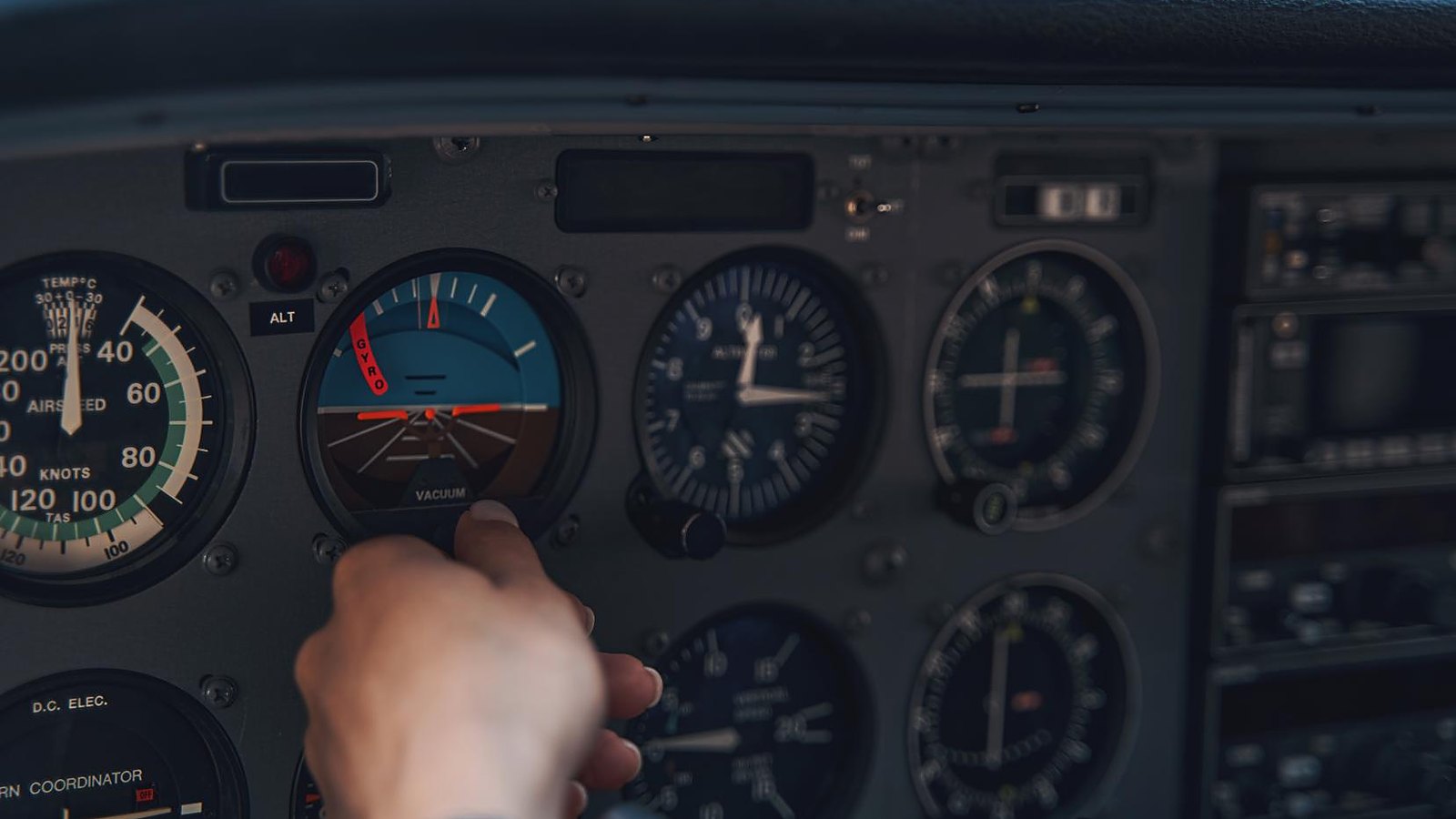
An instrument rating makes you a safer, more capable pilot, even if you never plan to fly in the clouds on purpose. It teaches you to fly precisely by reference to instruments, to work the IFR system, and to make better weather decisions. Southern California is a good place to earn one: the marine layer gives you real clouds to train in, and the airports around Redlands offer every common type of approach within a short flight.
Who can start
To earn an instrument rating for airplanes, you need at least a private pilot certificate with an airplane rating, or be getting one at the same time, and you must be able to read, speak, write and understand English (14 CFR 61.65). Plenty of pilots start their instrument training soon after the private checkride, while their skills and study habits are fresh.
The experience requirements
For an instrument-airplane rating, 14 CFR 61.65 requires:
- 50 hours of cross-country time as pilot in command, at least 10 of them in an airplane
- 40 hours of actual or simulated instrument time, including 15 hours of instrument training from an instructor with an instrument-airplane rating
- 3 hours of instrument training in an airplane within the 2 calendar months before the practical test
- One cross-country flight with an instructor under instrument flight rules, on an IFR flight plan, of at least 250 nautical miles along airways or ATC-directed routing, with an instrument approach at each airport and three different kinds of approaches
The cross-country hours are often the long pole. If you're building time anyway, plan those flights so they count, and fly some of them with a safety pilot under the hood.
The tests
The instrument knowledge test has 60 multiple-choice questions and a time limit of two and a half hours, and you need 70 percent to pass. The practical test covers an oral portion and a flight portion, graded against the FAA's Instrument Rating – Airplane Airman Certification Standards.
How simulator time counts
Time in an FAA-approved training device can count toward the 40 hours of instrument time when an instructor provides it: up to 10 hours in a basic aviation training device or 20 in an advanced one, depending on the device's approval, and no more than 20 hours from training devices of any kind (14 CFR 61.65).
We have a Redbird TD2 simulator, an FAA-approved training device, and up to 10 hours in it count toward the instrument rating. The simulator is also the best place to learn procedures before you fly them: you can pause, repeat an approach, or fail an instrument without burning fuel.
The approaches around Redlands
Within about 30 nautical miles of Redlands, you'll find every kind of approach the rating asks for:
- Riverside (KRAL): an ILS or localizer approach to Runway 9, RNAV (GPS) approaches to Runways 9 and 27, and VOR approaches
- San Bernardino (KSBD): ILS or localizer and RNAV (GPS) approaches to Runway 6
- Chino (KCNO): an ILS or localizer and an RNAV (GPS) approach to Runway 26R
- Brackett (KPOC): ILS, localizer and RNAV (GPS) approaches to Runway 26L, and a VOR or GPS approach
- Redlands (KREI): the RNAV (GPS)-A, a circling approach
Riverside alone offers an ILS, an RNAV and a VOR approach, which makes it a natural place to practice all three in a single lesson.
Train in the right airplane
Our Cessna 172, N5424T, has a WAAS-capable Garmin GNS 430W, which can fly GPS approaches down to LPV minimums where they're published, plus a second nav/com for VOR and ILS work and two Garmin G5 electronic flight instruments. Training in the same panel you'll fly after your checkride means nothing to relearn.
Use the local weather
The marine layer is a gift for instrument students. On many mornings in late spring and summer, there's a thin deck of stratus over the coast with good weather above and below it, a safe way to log actual instrument time with an instructor. Inland, clear days are ideal for practicing under a view-limiting device with a safety pilot or instructor.
After the rating: stay current
To act as pilot in command under IFR, you need six instrument approaches, holding procedures and course intercepting and tracking within the preceding 6 calendar months (14 CFR 61.57). If that lapses, you have another 6 calendar months to catch up with a safety pilot, an instructor or an approved device. After that, you need an instrument proficiency check with an instructor before flying IFR again. Currency is the legal minimum; regular practice is what keeps you sharp.
Training at Cornerstone
Cornerstone Flight Academy offers instrument training, instrument proficiency checks and simulator time at Redlands Municipal Airport. Ask about scheduling with an instrument instructor (CFII).
Call or text (909) 330-4748, or visit flycornerstone.com.
Book a $120 intro flight · Aircraft rental and time building · Pilot training at Cornerstone · More from the blog