Blog · Training
Flying Cross-Country Solo for the First Time: A Checklist Approach
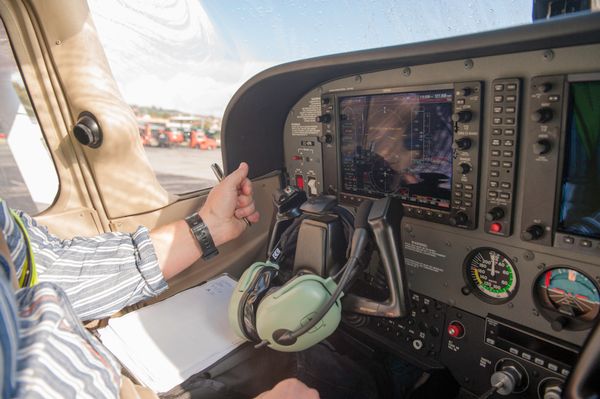
There's a difference between cross-country flights logged during training — with an instructor in the right seat — and the first one you do truly alone. No safety net, no one to catch your mistakes, just you, the aircraft, and the route you planned.
The first solo cross-country as a certificated pilot is one of the best flights you'll ever have. Here's how to prepare for it so it's memorable for the right reasons.
Before You Even Plan the Route
Choose the Right Conditions
Your first solo cross-country is not the flight to push weather minimums. Pick a day with:
- Clear skies or widely scattered clouds well above 3,000 feet AGL
- Visibility 10 miles or better
- Winds under 15 knots, crosswind component under your personal limit
- Forecast stable through your planned return — not just your planned departure
Check the TAF for your destination, not just your home field. Check the Graphical Forecasts for Aviation (GFA). Look at the winds aloft. And check again the morning of the flight.
Choose the Right Route
For a first solo cross-country, a simple route to a familiar airport type is better than an ambitious route to an impressive destination. Consider:
- A route you've flown with a CFI at least once
- A towered destination with an ATIS — you want ATC support on your first solo XC
- A route without complex airspace intersections or special use airspace concerns
- A field with a good runway length and no significant terrain on the approach
You can expand your range significantly on the next flight. Get this one right first.
The Day-Before Checklist
Flight planning:
- Route planned and cross-checked in ForeFlight and on a paper chart (or at least a printed backup)
- Checkpoints identified at reasonable intervals (every 10-15nm)
- Estimated time en route calculated for each leg
- Fuel burn calculated — with the legal reserve (30 minutes by day, 45 at night) and the 2 hours on board Cornerstone Flight Academy requires at departure
- Weight and balance calculated for departure AND landing weight
- Alternate airport identified and briefed
Weather:
- Graphical Forecasts for Aviation (GFA) reviewed for route and destination
- TAF pulled for destination
- Winds aloft briefing reviewed — check for turbulence and significant wind shifts at cruise altitude
- PIREPs reviewed for route
- SIGMETs and AIRMETs checked
Aircraft:
- Aircraft reserved in the member portal
- Aircraft squawks reviewed — no open Do Not Fly squawks
- Fuel status checked (plan to top off on departure morning if needed)
Destination:
- Airport diagram reviewed
- Traffic pattern entry reviewed (which runway is likely active based on forecast winds?)
- CTAF or tower frequency noted
- AWOS/ATIS frequency noted
- Fuel availability at destination verified if planning to refuel
The Morning-Of Checklist
Self-assessment (IMSAFE):
- Illness — feeling 100%?
- Medication — nothing that affects cognition or reaction time?
- Stress — clear head, no significant distractions?
- Alcohol — well within 8-hour rule, no hangover effects?
- Fatigue — well rested?
- Eating/Emotion — nourished, emotionally stable?
If any item gives you pause, this is the moment to make the right decision. There will be another day with better conditions and better self-assessment results.
Weather update:
- Pull fresh METAR for home field, destination, and alternates
- Pull fresh TAF for destination
- Check for new SIGMETs or AIRMETs
- Get a full weather briefing from 1800wxbrief or through ForeFlight's brief function — this creates a record of the briefing
Flight plan:
- File a VFR flight plan with your planned route, altitude, and ETD
- Note the plan to activate with FSS after departure (or use automatic activation if your filing service offers it)
Preflight Checklist
- Aircraft documents verified (ARROW): Airworthiness, Registration, Radio station license (needed only for flights outside the U.S.), Operating limitations (POH), Weight & Balance
- Squawks reviewed — nothing new, no Do Not Fly squawks
- Full preflight inspection per POH — every item, no shortcuts
- Fuel verified visually — both tanks, by sight, not just gauges
- Oil verified visually — within limits
- Engine run-up complete — oil temp and CHT in green before departure
Navigation materials:
- Charts current and aboard (physical or on tablet with offline data downloaded)
- ForeFlight flight plan loaded and active
- Paper navlog with checkpoints, headings, and times prepared (don't rely on tablet alone)
- Frequencies noted for each leg: departure, en route, destination, alternates
In-Flight Checklist
After departure:
- Activate VFR flight plan with FSS (or confirm auto-activation)
- Request flight following from ATC — highly recommended for your first solo XC
- Set cruise altitude, trim for cruise, verify fuel selector on correct tank
- First checkpoint tracking — are you on track and on time?
En route discipline:
- Hit each checkpoint — verify position, check time against estimate
- Fuel burn check every 30 minutes — cross-check gauges against planned consumption
- Weather scan — look ahead, compare to briefing, note any changes
- ATIS or AWOS for destination — pull it 20-30nm out
Approaching the destination:
- ATIS or AWOS received and current conditions noted
- Tower contact established (or CTAF monitoring if non-towered)
- Traffic pattern entry planned — know which runway, which traffic pattern direction
- Airport diagram reviewed
After landing:
- Flight plan closed with FSS after landing (this is required — do it before you do anything else)
- Fuel if needed
- Rest, eat, enjoy the destination
Common First Solo XC Mistakes
Not filing or activating a flight plan. If you don't come back and nobody's looking for you, search and rescue isn't coming. File it and activate it. Close it on arrival.
Relying entirely on the tablet. ForeFlight is excellent. It also has battery death, software glitches, and signal issues. Have a backup. Know your route without the technology.
Skipping flight following. ATC flight following is free, keeps you aware of traffic, and gives you a resource if anything goes wrong. There's no good reason not to use it.
Not checking weather at the destination until overhead. Pull the ATIS or AWOS 20-30nm out. Give yourself time to adapt your plan if conditions have changed.
Forgetting to close the flight plan. If you forget to close it on arrival, search and rescue is eventually mobilized looking for you. Set a timer on your phone for 30 minutes after planned landing as a backup reminder.
Skipping the fuel check. Cross-check your gauges against your planned consumption at regular intervals. Fuel exhaustion is preventable, always.
The Mindset
Solo cross-country flying is when you start to become the pilot you're building toward. Every decision is yours. Every checkpoint, every weather call, every altitude choice — you own it.
That's the point. It's supposed to feel significant because it is significant.
Plan conservatively, execute carefully, and enjoy every mile of it.
Cornerstone Flight Academy offers flight training and aircraft rental at Redlands Municipal Airport (KREI). Certificated pilots renting solo need a current checkout, flight review, medical and renter's insurance; student pilots fly solo under their instructor's endorsements. Contact us at info@flycornerstone.com with any questions.
Book a $120 intro flight · Aircraft rental and time building · Pilot training at Cornerstone · More from the blog