Blog · Safety
Carburetor Ice in Southern California: Not Just a Cold-Weather Problem
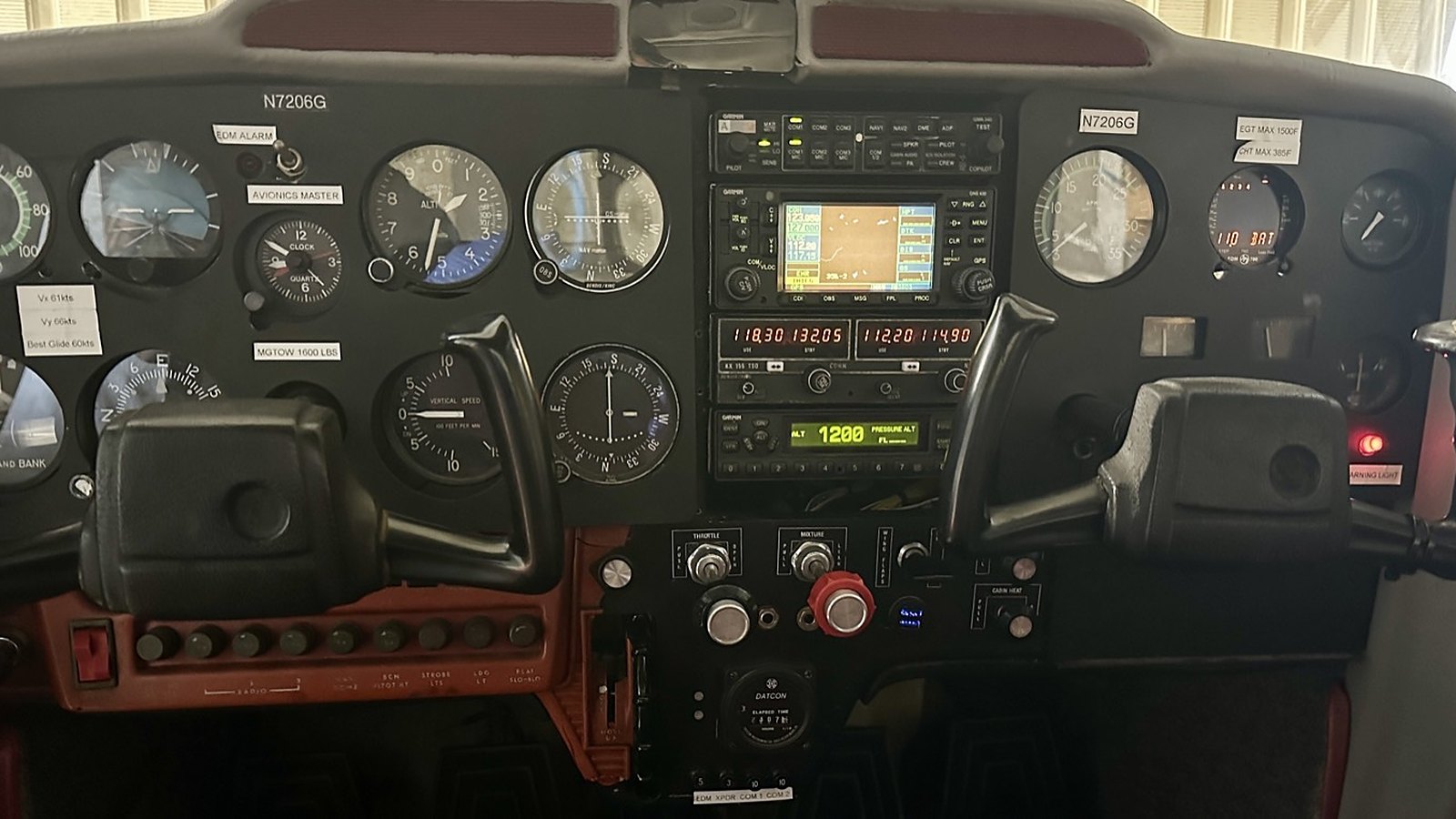
Carburetor ice sounds like a winter problem, so it's easy to forget about in Southern California. It shouldn't be. The FAA's Pilot's Handbook of Aeronautical Knowledge notes that carburetor ice can form at outside temperatures as high as 100°F, with humidity as low as 50 percent. Both of the airplanes we fly at Cornerstone, a Cessna 172 and a Cessna 150, have carbureted engines, so this is worth knowing well.
Why a warm day can still make ice
Inside the carburetor, air speeds up through a narrow passage called the venturi, and the pressure drops. Fuel evaporates into that air. Both effects cool the air sharply, by tens of degrees. If the air is humid, the moisture in it can freeze on the throttle plate and the venturi walls even when it's warm outside.
The handbook puts the most likely conditions at temperatures below 70°F with relative humidity above 80 percent. The FAA also publishes a carburetor icing probability chart that plots outside temperature against dew point, and it's worth keeping a copy in your flight bag. The closer the temperature and dew point are, the more moisture there is to freeze.
Where Southern California gets humid
The dry heat of a summer afternoon in the Inland Empire isn't the risk. The risk is the moist air that comes with the marine layer: cool, damp mornings in late spring and early summer, flights toward the coast, and low clouds and haze when the dew point sits close to the temperature. Cool, damp winter mornings after rain count too.
That's why a flight that starts on a clear morning in Redlands and heads toward the coast can pick up carb ice on the way, even though nobody would call the weather cold.
How it shows up
In an airplane with a fixed-pitch propeller, like ours:
- The first sign is usually a gradual drop in RPM, with no change in throttle setting.
- If the ice keeps building, the engine may start to run rough.
- At low power settings the ice can build without much warning, because the throttle plate is nearly closed and the engine is already making little power.
It's easy to blame a slow RPM loss on something else and just add throttle. On a humid day, suspect ice first.
Using carburetor heat
Carburetor heat sends warm air from around the exhaust into the carburetor, which melts ice and keeps more from forming. When you pull it:
- Expect the RPM to drop at first, because warm air is less dense and richens the mixture.
- If there was ice, the RPM will then gradually rise as the ice melts, and the engine may run rough for a moment while the water passes through. Keep the heat on.
- If there was no ice, the RPM stays at the lower value until you push the heat off again.
Use full heat, not partial heat, unless your handbook says otherwise. Follow your airplane's checklist for when to apply it, including during descents and before landing, when the throttle is reduced and the engine has less heat to fight ice on its own. And because heated air is unfiltered in many installations, avoid using carb heat on the ground in dusty areas unless you need it.
If carb heat doesn't fix it
Roughness that doesn't respond to carburetor heat may have another cause. Your airplane's checklist for rough engine operation walks you through the other likely culprits. Fly the airplane first, pick a place to land while you work through it, and treat a rough-running engine as a reason to land at the nearest suitable airport rather than to press on.
Carb ice on the ground
Ice can also build during a long taxi or a wait at the hold-short line, when the engine has been running at low power for a while on a humid morning. That's one more reason the carb heat check in your run-up matters: it tells you the system works, and a bigger-than-normal RPM rise afterward can tell you ice was already forming.
A few habits that help
- Check the temperature and dew point spread before every flight, and look at the carburetor icing chart when they're close.
- Do the carb heat check during the run-up, and know what a normal RPM drop looks like in your airplane.
- On humid days, watch your RPM in cruise as closely as your altitude.
- When you reduce power for a long descent, follow your checklist for carb heat before you pull the throttle back.
Learn it in the airplane
Carb ice is easier to understand once you've seen the RPM drop and recover yourself. An instructor can show you what to look for in a Cessna 150 or 172, and how to tell ice from other engine trouble.
Cornerstone Flight Academy rents and trains in both at Redlands Municipal Airport. Call or text (909) 330-4748, or visit flycornerstone.com.
Book a $120 intro flight · Aircraft rental and time building · Pilot training at Cornerstone · More from the blog